






2 years ago


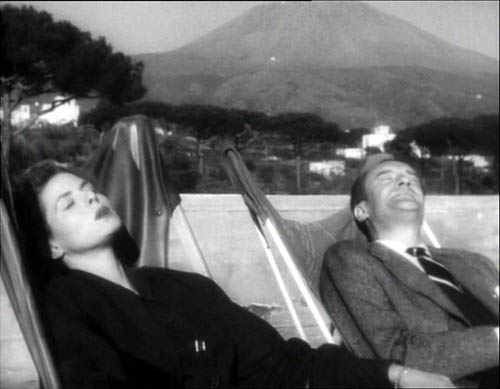
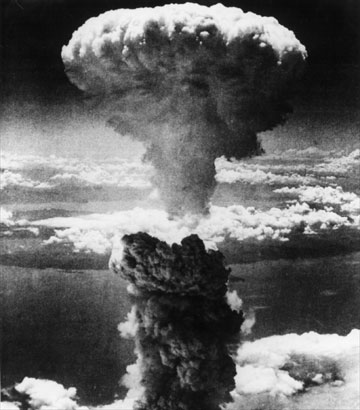
 Michelangelo Antonioni is safe now in heaven, perched high above his rabid critics and his cultish followers alike, looking down at us, probably, with the same combination of Christ-like love and God-like omniscience that made his films so beautiful yet so devastatingly honest. In this still, from 1960's groundbreaking L'avventura, Monica Vitti looks down from the cliffs of a tiny volcanic island into the sea which, just like his characters, remains forever changing yet always the same. In it, she might see a reflection of her inner anguish, or a symbol of life's impermanence, or who knows what other meaningful similitudes. Michelangelo Antonioni never gave us too many answers, and of course his general appeal suffered as a consequence, but it's hard to argue against his work in retrospect. In Flickers, Gilbert Adair's love letter to the first century of film, we are told that American audiences don't want to see two things: subtitles or subtleties. Unfortunately for them Antonioni delivers both, with little need for much of the first and a career-long elevation of the second, and yet it was at Cannes - and before a mostly European audience - that he was famously booed out of the theater during L'avventura's initial screening. Later that week justice would be served when at the demand of his fellow artists he was awarded the special Jury Prize (that year's competition included work by Tchoukhrai, Minnelli, Bergman, Ichikawa, Fellini, Dassin, Ray, Bunuel and on and on...) and cinema suddenly appeared to have found it's most modern voice: a voice that had it's predecessors to be sure (most directly Rossellini) but that left its indelible stamp on a far greater number of artists who followed in his footsteps, and mostly walked forever in his shadow. I still remember learning of Antonioni's death - which at 94 and unable to speak or walk following a debilitating stroke should probably have come as no great surprise -and the terrible, hollow feeling of loss that set in almost immediately. The problem with the pain of true loss is that, unlike whatever it replaces, it never goes away: on the contrary it slowly eats at everything else until one no longer hopes for better or tries for more, and instead simply accepts the feeling as a condition of his existence. And yet how else could it be, with Michelangelo Antonioni? What other feeling should we expect to encounter when dealing with the greatest filmmaker of the nuclear age than ennui, a word whose meaning I might never have learned were it not for him. A word that pops up ubiquitously in his film's reviews. A word for which, after having been illustrated again and again for us by Antonioni with such clarity, no subtitle is necessary.
 Click through to this link and watch a short film that features a famous performance by Maria Callas as Madea in Cherubini's opera, but you could listen to any of her arias and be equally amazed. Indeed, she may or may not have been the Grande Dame of her time, a time of giants, but Callas's voice was the popular voice - even if she did not always meet critical success. You might say it was the voice of the people during the human race's proudest moment. While watching the film clip, I imagine transmitted radio waves of the original televised fragment shooting through space; a message in a bottle. Back home, it leaves a far colder reality: the shameless, unblinking eye of video; the self-hating mockeries of post-modernism; the loveless, masturbatory gymnastics of contemporary art and music...but Callas would know well what she was missing. From 1952 to 1953, Maria - the Astoria, Queens native whose classic Greek features and persona only further qualify her to seek her place among the Gods - lost a reported 80 pounds, supposedly in order to elevate her celebrity to the highest level. It was a decision that would have disastrous consequences on her abilities as a singer, but had inarguable advantages for her career as a whole. Still, weightless at last and accelerating through space as radio waves, I would think that she would be happy to have escaped the current ethos of decline and meaninglessness. The desperate re-solving of already deciphered mythic codes. The age where man's heroes are torn to shreds, and the artist's image is far more relevant than the product of her craft.
 I can't give you much information about this image, other than it was part of a show of Japanese Postcards at Boston's Museum of Fine Arts in 2003. I love the ripples on the water and her reflection, and my sister pointed out to me how skillfully the artist has rendered the delicate curls at the base of her hairline - suggesting that they are slightly wet (perhaps from steam if she is bathing in an onsen, a Japanese natural hot-spring). The piece is attributed to Namuri Ichijo, 1877-1910, but I can't find any information on this person. It is possible that the museum simply copied his name off of the postcard, and it is further possible that the name is a pseudonym. The MFA website reproduces a few pieces by this mysterious woodblock artist including this lovely example, appropriately titled Woman with Umbrella, in which the artist again demonstrates his impressive abilities, particularly in depicting reflections in water and hair. Anyway, not much to say here other than that the internet is a wellspring of wonderful treasures and that Japanese woodblock prints are sure to get more than one post on this blog.
 The novel Neuromancer, published in 1984 and written by William Gibson, is perhaps the greatest masterpiece of the cyberpunk sci-fi sub genre, and was the principal influence on countless other works - such as Shiro Masamune's 1989 manga Ghost in the Shell - which in turn became indispensable donors of material to Hollywood romps like Total Recall and The Matrix. In it, Gibson's uncanny predictions allowed us a sneak peek at the internet long before the public had even imagined any such worldwide inter connectivity. The neo-noir alleyways of a technologically-saturated, dystopian future prove to be just the launching pad for a more metaphysical journey, first through the wondrous world(s) of cyberspace (a term Gibson himself coined), and then ultimately into the much more dangerous world of inner space. Just like its hero, it is in this inner space that the novel must eventually travel in order to find its heart, because while the constant friction between the limits of man's material world and the freedoms afforded by his virtual ones serves as a major theme (revisited over and over throughout the story), and the main antagonist - a self aware artificial intelligence seeking to be liberated of its man made constraints - fits right in with that theme, in the end the story works because it is about a man confronting himself on a fundamental level. A level where one's basic architecture becomes discernible. A level more ambiguously delineated than the binary code that governs the programming of a computer: the tiny place where we each must go to find our soul.